Tariff Management
Rate Configuration & Import Management
Tariff management allows you to import, configure, and manage rate structures from your VoIP providers. This system supports CSV import functionality and provides flexible rate management for different destinations and services.

Overview
Tariffs define the pricing structure for your VoIP services. They can be imported from provider rate cards and customized to meet your specific billing requirements. The system supports multiple tariffs per provider, enabling flexible rate management.
Key Features: * CSV rate card import * Multiple tariff support * Custom rate configuration * Filtering and exclusion rules * Automated rate updates
Tariff Import Process
Step 1: Prepare Rate Card
Download your provider’s rate card in CSV format. Ensure it contains the required columns for proper import. Only the first row may contain the header column names as mapping only checks the first row as header. If you have 2 rows before the actual rate mapping will not be suitable.
Step 2: Create Tariff
Navigate to ictVoIP Billing → Tariffs and click Add New Tariff.
Naming Convention:
Use a descriptive naming convention for your tariffs:
Format: ProviderName_Type_Year_Month
Example: Telnyx_Outbound_2024_01
Example: Twilio_International_2024_Q1
Naming Examples:
Telnyx_Outbound_2024_01 - Monthly outbound rates
Twilio_International_2024_Q1 - Quarterly international rates
Bandwidth_Local_2024_Annual - Annual local rates
Provider_Custom_2024_Special - Custom rate structure
Step 3: Upload CSV File
Highlight the tariff name
Click Open to access the file upload dialog
Select your provider’s CSV rate card tariff
Click Upload to begin the processing
CSV Mapping Requirements
Required Columns:
Your CSV file must contain the following minimum columns:
Description                | Prefix | RateValue | Increment
---------------------------|--------|-----------|----------
Canada - 204 Manitoba      | 1204   | 0.01      | 6
Canada - 226 Ontario       | 1226   | 0.01      | 6
Canada - 416 Metro Toronto | 1416   | 0.01      | 6

Column Descriptions:
ShortDescription - If available Human-readable short description
Description - REQ-Human-readable description of the rate
Prefix - REQ-Dialing prefix & or country code
RateValue - REQ-Base Rate per minute or unit
Increment - REQ-Billing increment in seconds
Lastratechangedate - If available last known rate change date
Oldrate - If available the old rate
RatePremium - If available the Premium rate
Select Column Mapping (not used) - DEFAULT-When set to this it will not be mapped & imported
Optional Columns:
Additional columns may be supported depending on your provider but mapping is not recommended and should be left as DEFAULT Select Column Mapping (not used) * Setup Fee - Connection charges * Minimum Duration - Minimum call duration * Grace Period - Grace period for short calls * Effective Date - Rate effective date
Import Process
Step 1: File Validation
The system validates your CSV file for: * Required column presence * Data format consistency * Rate value validation * Duplicate entry detection
Step 2: Mapping Configuration
Map your CSV columns to the system requirements: * Select the appropriate column for each field * Verify data types and formats * Set default values if needed Once your mapping has been saved you can then highlight the tariff and upload the latest rates from your provider and the mapped fields will already be saved.
Step 3: Import Execution
Execute the import process: * Review import summary * Confirm rate calculations * Process the import
Step 4: Import Completion
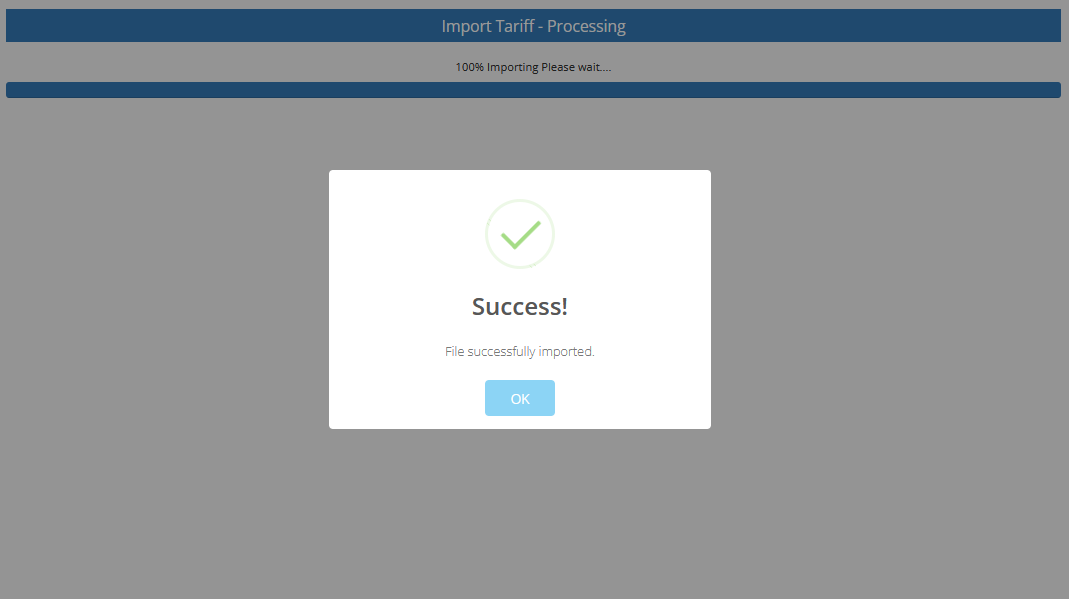
Post-Import Actions:
Review imported rates - Verify accuracy
Configure filtering - Set up exclusions if required
Assign to providers - Link to provider accounts and packages
Test billing - Verify rate application autobill against CDRs
Rate Filtering
Filter Configuration:
After import, configure filtering rules to exclude specific numbers or destinations:
Filter Type: Toll Free Numbers
Action: Exclude from billing
Pattern: 1-800-*, 1-888-*, 1-877-*
Common Filter Types:
Toll Free Numbers - 1-800, 1-888, 1-877, etc.
Emergency Numbers - 911, 112, 999, etc.
Directory Services - 411, 118, etc.
Premium Numbers - 1-900, etc.
Custom Patterns - Specific number ranges
Filter Configuration:
Navigate to Billing Management for detailed filtering options and configuration.
Tariff Management
Updating Tariffs:
To update an existing tariff:
Select the existing tariff name
Upload the new CSV file
The system will replace existing rates
Verify the updated rates
Tariff Versioning:
Maintain historical rate data
Track rate changes over time
Support rollback to previous versions
Audit trail for rate modifications
Rate Validation:
Verify rate accuracy
Check for duplicate entries
Validate rate ranges
Confirm currency formatting
Best Practices
CSV Preparation:
Use consistent formatting
Include all required columns
Validate data accuracy
Test with sample data
Only the first row allowed as header for columns
Naming Conventions:
Use descriptive names
Include date information
Maintain consistency
Avoid special characters
Import Process:
Test with small datasets
Verify mapping accuracy
Review import results
Document changes
Rate Management:
Regular rate reviews
Monitor provider changes
Update tariffs promptly
Maintain backup copies
Troubleshooting
Common Import Issues:
Missing Columns - Ensure all required columns are present
Format Errors - Check CSV formatting and encoding
Rate Validation - Verify rate values are numeric
Duplicate Entries - Check for duplicate prefixes
check import_debug Logs
Import Errors:
File Size - Large files may timeout over 100MB
Encoding Issues - Use UTF-8 encoding
Special Characters - Avoid special characters in data
Date Formats - Use consistent date formatting
Support Information:
For tariff-related issues, provide: * CSV file sample * Error messages * Import configuration * Expected vs actual results * All debug logs within the LOGS dir of the ictVoIP Billing addon. Next Steps ———-
After tariff configuration:
Provider Assignment - Link tariffs to providers
Package Configuration - Create service packages
Billing Setup - Configure automated billing
Testing - Verify rate application with autobill